
Learn
Courses and guides
Courses for teachers and support staff who want practical strategies rather than theory, and free guides drawn from my own practice and research. The courses are hosted on partner platforms, so those buttons take you across to sign up. Everything else here is free.
Featured course
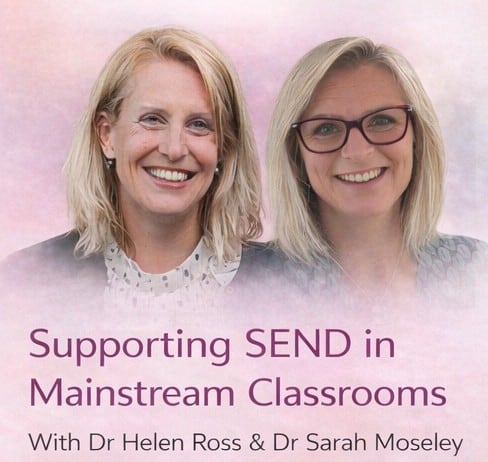
Supporting SEND in Mainstream Classrooms
A four-week, self-paced online course for teachers and support staff in mainstream, special and alternative settings, focused on removing barriers to learning rather than chasing diagnostic labels. I made it with Dr Sarah Moseley.
- Lifetime access
- Classroom-ready strategies
- Grounded in research
- Four weeks, self-paced
All four weeks £140, individual weeks available separately
View the courseThe course is hosted on Dr Sarah Moseley's platform. More courses are in development.
Free guides
Written to be used rather than admired. If a guide answers your question and you never need to contact me, that is a good outcome.
When reading is hard
What reading difficulty looks like day to day, why it happens, and the changes that help most.
When writing is the thing they avoid
Why writing is so demanding, what sits underneath letter formation, and how to help without making it a battle.
Why spelling does not make sense
Why English spelling defeats so many learners, and the multi-sensory strategies that actually work.
Remembering things
Why working memory causes so much daily chaos, and the systems that genuinely help.
Knowing what goes first
Why starting is the hardest part, and the prompts and tools that get someone moving.
Brilliant out loud, stuck on paper
The gap between spoken and written work is the clearest early signal. Why it happens, and what to do about it.
Leaving school when you are neurodivergent
What helps young people, particularly girls, move from school into work or further study. From the Churchill Fellowship research.
Also worth your time
Longer pieces, the videos, and the research behind all of it.
Articles
20 longer pieces on dyslexia, assessment, wellbeing, teaching and technology, each grounded in published research with the sources linked.
The Schools Guide to Dyslexia
A free technology toolkit for teachers, covering six skill areas from phonological awareness through to writing. Co-authored by Helen.
What happens in a dyslexia assessment
The whole process from booking to report: how long it takes, what we do on the day, and how long the report stays valid.
Podcasts and interviews
Helen on The SENDcast, Dyslexia Explored, re:think dyslexia and others, talking about dyslexia, ADHD, mental health and identity.
The Elevator Series
Fourteen short videos covering a whole dyslexia journey, from first signs through assessment to working out who you want to be. Each has a full transcript.
The Churchill Fellowship report
School and Beyond, my research on supporting dyslexic and neurodivergent girls through the move beyond school. Free to download.
Publications and media
Peer-reviewed papers, invited chapters and evidence to Parliament, with links to the originals.
Literacy Learning Journeys
The book: a practical guide to supporting dyslexic children from Early Years to age 18, published by Routledge.
Questions and answers
The questions I get asked most, on assessments, costs, tutoring and the process.
Not found what you needed?
Book a free 20-minute call and ask me directly. I reply within 48 hours.