
Guide
Remembering things
I have a brain like a goldfish. My students know it, the young people I assess know it, and my husband deals with it daily. So I have had to develop a gazillion different ways of remembering things and not losing my brain, or leaving it in a jar somewhere and then forgetting where the jar is.
Where it shows up
Equipment and kit
The PE bag, the right books, the letter that needed signing. Not carelessness, just a memory system running at capacity.
Multi-step instructions
Give three instructions at once and only the last one survives. This is one of the most reliable signs, and one of the most commonly mistaken for not listening.
Losing your place mid-task
Starting something, being interrupted, and having no idea where you were. It underpins a lot of what looks like distractibility.
Planning and knowing what comes next
Working memory underpins a great deal of planning, and of working out what you need to do next. When it is unreliable, so is everything downstream of it.
What helps
Externalise it, without shame
I still pack my bag the night before, and I am well past the age where I am supposed to need to. I am okay with that. It is what I need to do. Take the job out of your head and put it somewhere reliable.
Checklists and picture reminders by the front door
For young people, a checklist or picture reminder by the door works well for equipment. Over time it becomes more automatic, but it stays there as a backup.
Let the phone shout at you
Alarms, reminders, calendar alerts. There is no prize for holding it all in your head, and no shame in not doing so.
Post-it notes for ideas
Have an idea, jot it down. Then you can physically move the notes around while you work out what to do with them. The thinking happens on the table instead of in your head.
Bullet points, spelling ignored
Spill the ideas out first. Do not think about spelling at that stage, just get them down. Tidying comes later, and separating the two makes both easier.
Mind maps and pictures
A good visual way to snapshot how you want to plan something. Pictures suit those who are a bit more artistic and visual. I cannot draw well, so I do not use them, and that is fine too. Use what works for you.
Why this matters more than it looks
Working memory is the desk space your brain works on. If the desk is small, everything takes longer and things get knocked off the edge, regardless of how clever the person is.
That is why forgetting is so often read as not caring. Someone who has forgotten their kit for the fourth time this term looks careless. Usually they are managing a system that is quietly overloaded, and often they are already embarrassed about it.
For teachers
Give one instruction at a time, or write them where they can be seen. Do not make a child hold a question in mind while they queue for help. Allow processing time after asking something, and resist filling the silence.
None of this slows a class down noticeably, and it removes a lot of avoidable failure.
For parents
Build the systems together rather than imposing them, and expect to adjust them. A system that a child has helped design is one they might actually use.
And be careful about the language. Forgetting is not a character flaw. The difference between “you never remember anything” and “let us find a way to make this easier to remember” is, over years, enormous.
This guide grew out of episode 5 ofThe Elevator Series, where you can watch me talk it through in about two minutes.
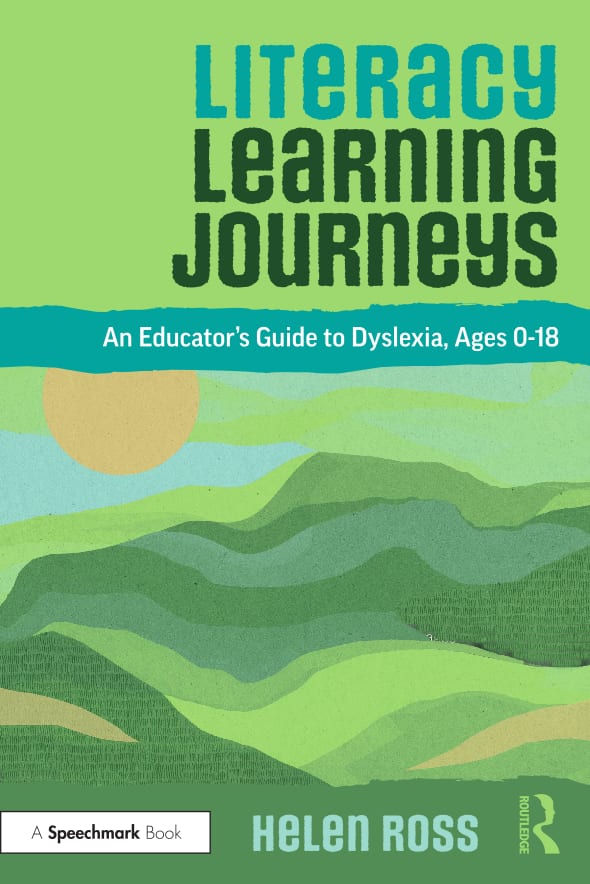
The book
There is a whole book of this.
Literacy Learning Journeys is a practical guide to supporting dyslexic children from Early Years to age 18, with evidence-based strategies, real case studies and reflection prompts. Published by Routledge.
Read more about the bookWondering whether to get an assessment?
Book a free 20-minute call and tell me what you have noticed. I will tell you honestly whether an assessment is the right next step.