
Guide
When writing is the thing they avoid
Writing is one of the things most affected by dyslexia, and it is badly underestimated. It looks trivial, and it is not. Several demanding skills have to run at once, and if any of them is shaky the whole thing stalls.
What makes writing hard
The physical act itself
Handwriting needs fine motor control, and the intricacy of those movements is genuinely demanding. If the hand tires quickly or the grip is awkward, everything after that is harder.
Letter formation
Knowing how each letter is made, and making it the same way every time, is a learned motor pattern. Until it is automatic it takes attention that should be going on the content.
Breaking words apart and rebuilding them
Working out how to chunk a word down, and then build it back up into something recognisable, is a constant background task while writing.
Everything else, at the same time
Spelling, punctuation, handwriting, and what you actually wanted to say, all competing for the same limited attention. Something has to give, and usually it is the ideas.
What helps
Start below handwriting, with fine motor skills
Letter formation is preceded by fine motor skill. Pre-writing skills are absolutely vital: strengthening fingertips, building stamina. That means pen skills, but also making pom poms and scrunchies, those great nineties inventions that have worked their way back into school culture. I made a lot of scrunchies when I was about eight.
Use a proper handwriting scheme
There are good schemes of work for handwriting. Handwriting Rescue is one I and colleagues have used over the years. A structured scheme beats well-meaning practice.
Consider cursive early
For young children I would try cursive. The muscle memory of joining letters, those fluid shapes, is good for pen grip, penmanship and fluency. For older children who are already struggling, I am less sure it is worth pushing. See how you go, and talk to your learners.
Take the handwriting out of it sometimes
If you want to know what a child thinks, let them type it, dictate it or tell you. Separating the idea from the transcription shows you what they actually know.
Do not mark everything at once
If a piece is about ideas, mark the ideas. Correcting spelling, handwriting and content in one pass tells a struggling writer only that everything they did was wrong.
The bit people miss
Writing gets treated as a basic skill that should simply be there by a certain age. It is not basic. It is one of the most cognitively demanding things we ask children to do, and we usually ask them to do it while also thinking about something else.
That is why a child can talk fluently about a topic and then produce three laboured sentences about it. The knowledge is not missing. The route from the knowledge to the page is blocked.
For teachers
Watch for the gap between what a student can tell you and what they hand in. If it is wide, the problem is rarely comprehension or effort.
Scribing, typing, voice notes and mind maps are not ways of letting someone off. They are ways of finding out what they know.
For parents
Fine motor work does not have to look like schoolwork. Threading, model building, cooking, Lego, scrunchie-making. All of it builds the hand strength and control that handwriting rests on, and none of it feels like a chore.
If writing has become a nightly battle, that is worth taking seriously in its own right. The avoidance is usually protective, not defiant.
This guide grew out of episode 3 ofThe Elevator Series, where you can watch me talk it through in about two minutes.
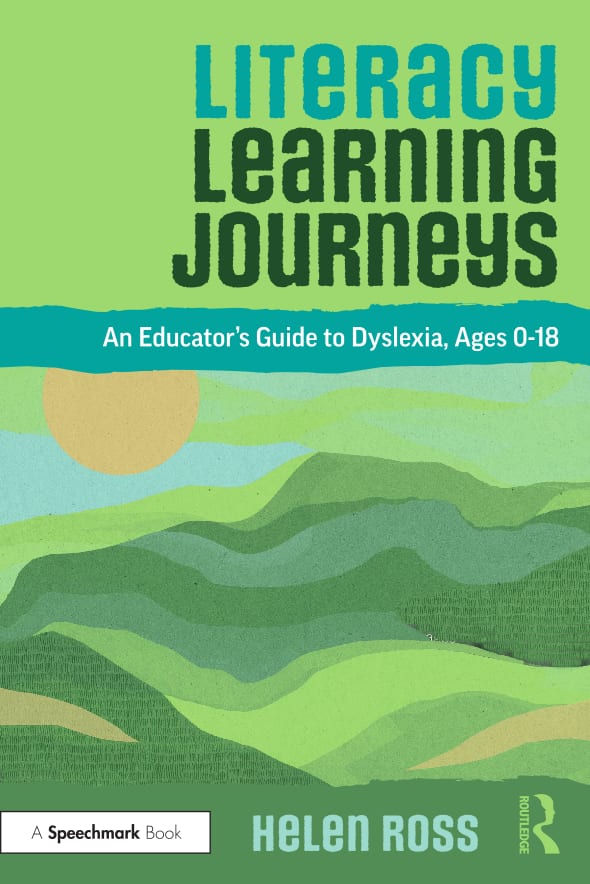
The book
There is a whole book of this.
Literacy Learning Journeys is a practical guide to supporting dyslexic children from Early Years to age 18, with evidence-based strategies, real case studies and reflection prompts. Published by Routledge.
Read more about the bookWondering whether to get an assessment?
Book a free 20-minute call and tell me what you have noticed. I will tell you honestly whether an assessment is the right next step.