
Guide
Why spelling does not make sense
English is a funny beast. The phonemes, which are the sounds we build words up with, and the graphemes, which are how we write those sounds down, simply do not line up. There is regularity and there are rules, but there is an exception to every rule, and even the rules have rules. It gets bonkers.
Why it is genuinely difficult
The sounds and the letters do not match
Unlike more transparent languages, English does not give you one letter per sound. The same sound is spelled several ways, and the same letters make several sounds. Nobody is imagining the difficulty.
The rules have exceptions, and the exceptions have rules
Teaching a rule and then immediately meeting words that break it is confusing for any learner. For someone who is already working hard to hold the rule in mind, it is worse.
It is a memory task as much as a language one
Much of spelling comes down to holding a pattern in mind long enough to reproduce it. If working memory is unreliable, so is spelling, however hard someone tries.
What works
Say it first
With an unfamiliar word, speak it. Work out how many beats or syllables it has. Chunk it down. If you know the word has three beats, hear them, say them, break them down, and then work out whether you can spell any of the sounds inside those syllables.
Use the history of the word
Etymology is genuinely useful. Once you know the roots, whole families of words stop being arbitrary. This is one of the few things that turns English spelling from memorisation into reasoning.
Teach it multi-sensory
Flashcards so people can see the word and a picture associated with it. Writing in sand, literally using fingers, which is a great way to get a feel for the shape of letters. Plasticine, and wooden letters to inspire the plasticine building.
Match the method to the person
There are many ways to teach spelling, and which one works depends on the person: their personality, their underlying cognitive strengths and weaknesses, and what they actually enjoy. Different people like different things, and enjoyment matters more than tidiness.
Use structured programmes for reinforcement
Nessy, IDL Dyslexia and Units of Sound all reinforce spelling in a structured way, and there are plenty of others. They work best alongside teaching, not instead of it.
Try mnemonics and memory techniques
Memory techniques, including the mind palace approach, work well for the words that simply have to be learned. It sounds like Sherlock Holmes, and it is also genuinely effective.
What not to do
Do not give a long list of unrelated words on Monday and test them on Friday. For a learner with literacy difficulties that is a weekly reminder of failure that teaches almost nothing, because nothing connects the words to each other.
And do not correct every spelling in a piece of writing. If a child has written something interesting, respond to what they wrote. Pick two or three spellings worth working on, and leave the rest.
For parents
Spelling is the area where well-meaning help most often turns into conflict. If homework is going badly, it is entirely reasonable to stop, write a note to the teacher, and protect the evening.
Persistent spelling difficulty alongside reading difficulty, particularly where a child is obviously bright and articulate, is one of the clearer reasons to get a proper assessment rather than keep guessing.
This guide grew out of episode 4 ofThe Elevator Series, where you can watch me talk it through in about two minutes.
The book
There is a whole book of this.
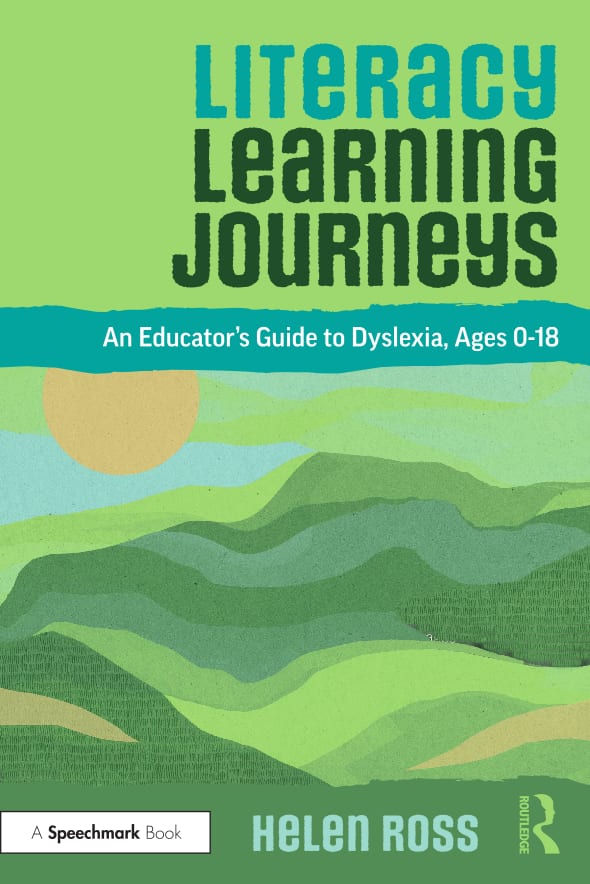
Literacy Learning Journeys is a practical guide to supporting dyslexic children from Early Years to age 18, with evidence-based strategies, real case studies and reflection prompts. Published by Routledge.
Read more about the bookWondering whether to get an assessment?
Book a free 20-minute call and tell me what you have noticed. I will tell you honestly whether an assessment is the right next step.