
Guide
Brilliant out loud, stuck on paper
This is the one that makes people pick up the phone. A young person can tell you anything about anything they are interested in, clearly and in a lot of detail. Then they try to get it on paper, and it is like pulling teeth. That discrepancy is a telltale sign, and it is usually where the questions start.
What you notice
They can explain it perfectly
Ask about something they care about and you get depth, accuracy and enthusiasm. There is no shortage of understanding or vocabulary.
The written version is a fraction of it
Three flat sentences where the spoken answer ran for two minutes. The knowledge does not survive the journey to the page.
The gap widens as work gets longer
Short answers may be fine. Extended writing exposes it, because there is more to hold in mind at once.
Everyone says they are bright
Reports full of "capable but underachieving" and "needs to apply themselves". That phrasing is often describing this exact gap without recognising it.
What helps
Reduce what has to be held at once
Plan first, in whatever form works: mind map, bullets, voice note. Getting the structure out of working memory frees it for the writing itself.
Use the spoken channel deliberately
Let them explain it to you, then write down what they said, then work on it together. You are not doing it for them. You are removing the bottleneck so the actual thinking is visible.
Separate composing from transcribing
Dictation, typing and speech to text all split the two jobs. Doing both at once is what causes the collapse.
Mark the ideas, not the transcription
If a piece is about content, respond to the content. Otherwise the message received is that the ideas do not matter.
Get some information behind you
Before talking to a professional it helps to have some information up your sleeve. The British Dyslexia Association's Empowered Parents is a genuinely useful place for parents to start. For teachers, Nessy has essential teaching tips that give a quick sense of what you can change easily and quickly in the classroom.
What is actually happening
Getting an idea from your head onto paper involves pulling information out of long term memory, retrieving it, getting it into an ordered space in working memory, and then turning fairly abstract concepts into words and sentences that can be written down.
That places an enormous load on executive function. When any part of that chain is unreliable, the output bears no relation to the understanding behind it.
So the gap is not a puzzle. It is what you would predict.
Why it matters that you noticed
This discrepancy is the point at which parents and teachers usually start looking for more information, and they are right to. A child who is obviously capable and consistently underperforms on paper is not lazy or unmotivated, and being told that they are, year after year, does real damage.
The other reason it matters: these young people often work twice as hard for half the credit, and know it. The confidence cost is frequently worse than the academic one.
What to do next
Talk to the school, and talk to each other. If the pattern is persistent, a proper diagnostic assessment answers the question clearly rather than leaving everyone guessing, and produces a report the school can act on.
This guide grew out of episode 7 ofThe Elevator Series, where you can watch me talk it through in about two minutes.
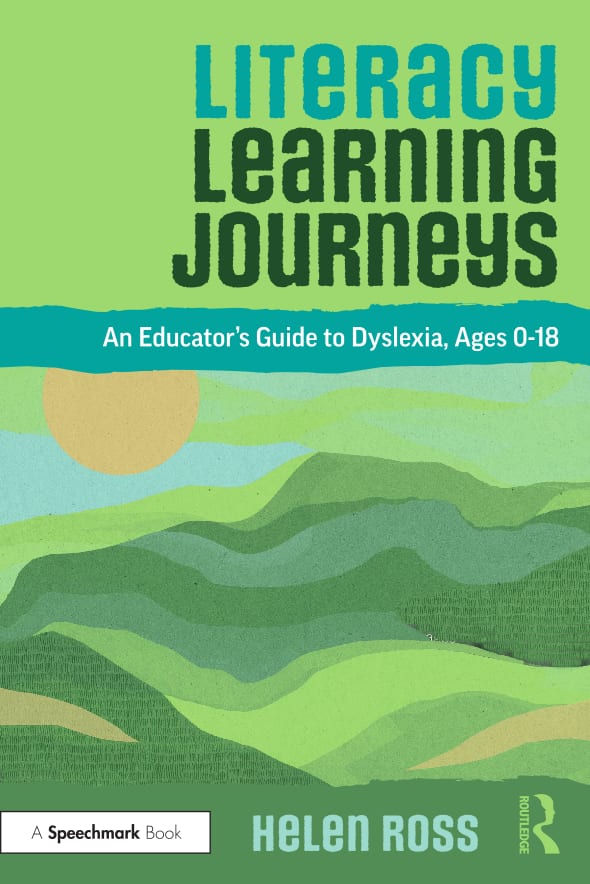
The book
There is a whole book of this.
Literacy Learning Journeys is a practical guide to supporting dyslexic children from Early Years to age 18, with evidence-based strategies, real case studies and reflection prompts. Published by Routledge.
Read more about the bookWondering whether to get an assessment?
Book a free 20-minute call and tell me what you have noticed. I will tell you honestly whether an assessment is the right next step.